Busitema University Marks 17th Graduation as 2,268 Students Complete Their Studies
3 October 2026
Busitema University graduated 2,268 students at its 17th Graduation Ceremony on Saturday 3 October 2026, celebrating a major academic milestone while placing equal attention on what the Class of 2026 will do with the knowledge and skills gained at the University.
The graduating class was the largest in the University’s history. It included three PhD graduates and the first graduates from several programmes introduced as Busitema expands its training into new areas. By the close of the ceremony, the University’s alumni numbers had risen to 18,799.
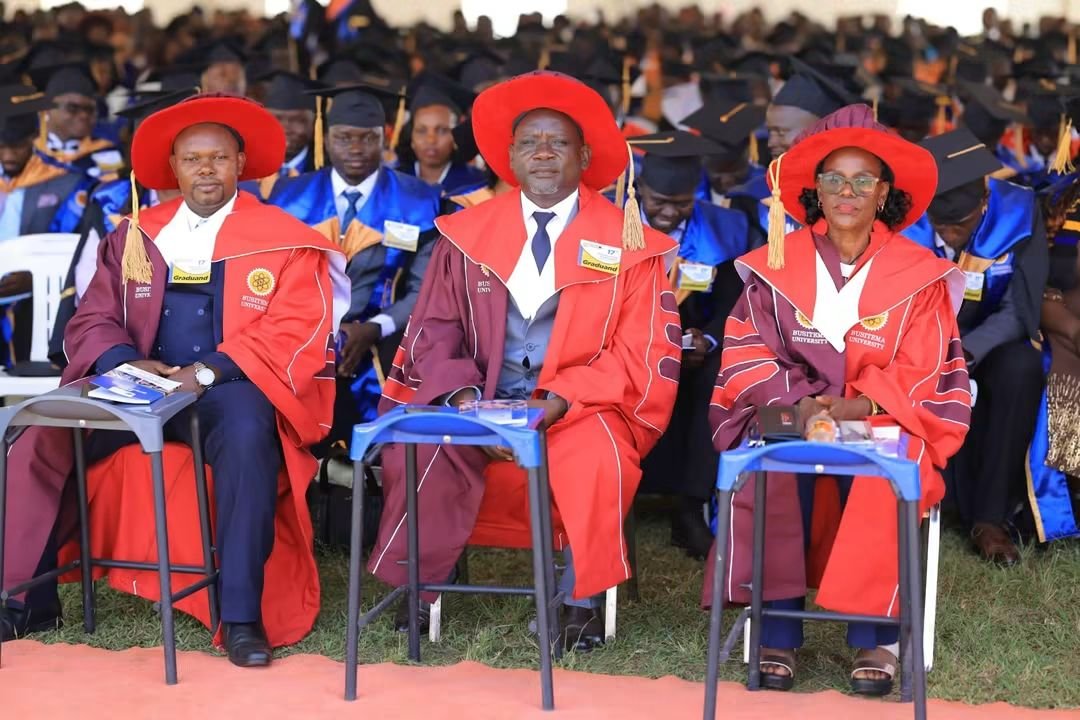
The graduating class comprised 939 women and 1,329 men, with women accounting for 41.4 per cent of the total. Among those completing their studies were 149 master’s graduates, 685 diploma graduates and 588 certificate graduates.
The ceremony marked another milestone in Busitema’s growing postgraduate training, with three doctoral candidates joining the University’s second cohort of PhD graduates. Two received PhDs in Biodiversity Conservation and Management, while the third graduated in Business Administration and Management. The day also marked a first for several programmes, with their pioneer students completing the Master of Science in Cyber Physical Systems Engineering, Master of Science in Artificial Intelligence, Bachelor of Science in Statistics and Higher Education Access Certificate in Humanities.
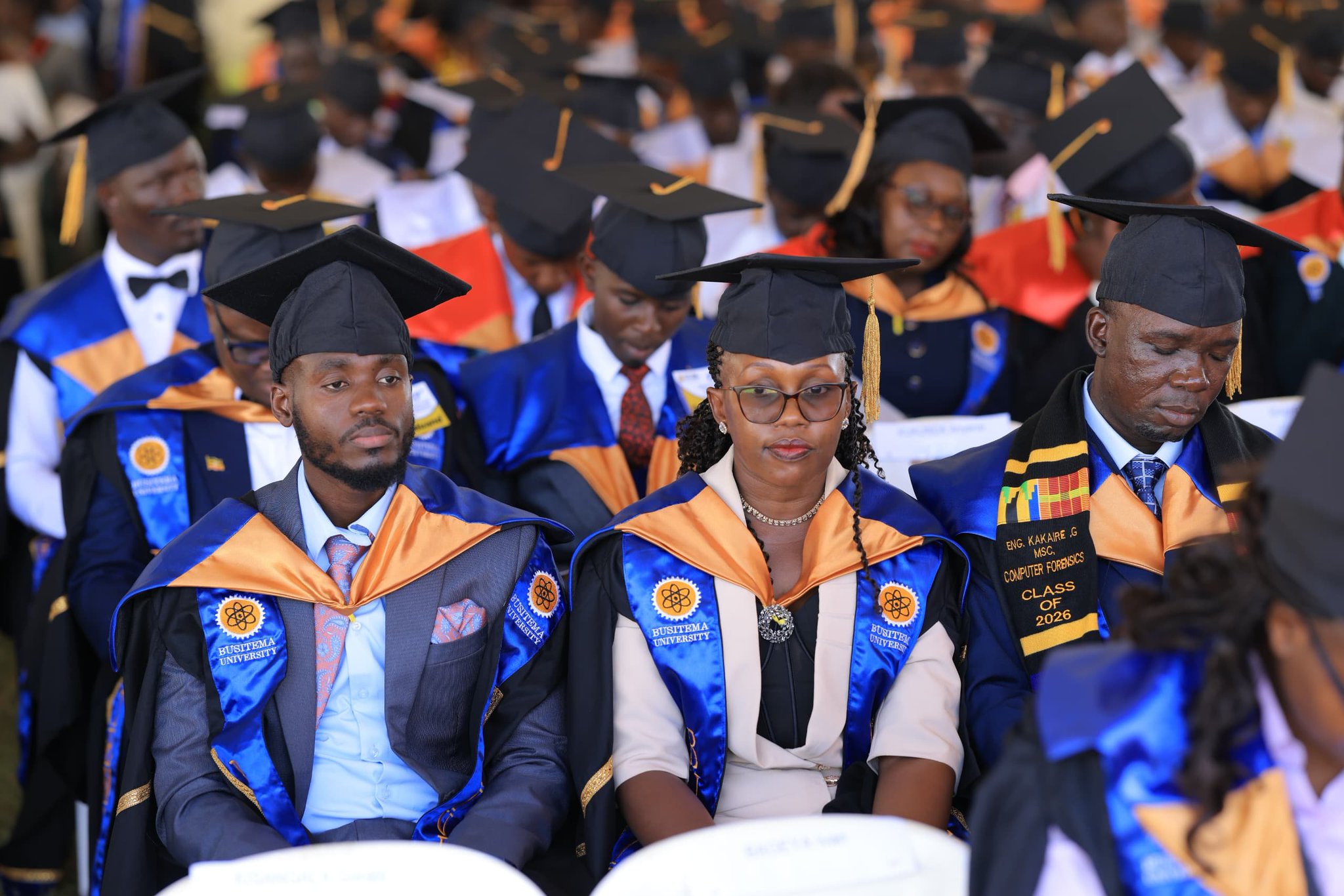
The ceremony also recognised some of the University’s strongest research output over the past year. Prof. Olupot-Olupot led by publication with 12 papers, followed by Assoc. Prof. David Mukunya and Dr. Joseph Epuitai with nine each, while Dr. Moses Kigozi recorded eight. Their recognition came on a day when Busitema also graduated its second cohort of PhD students, placing research and advanced training among the key academic milestones of the ceremony.
The record graduating class comes at a time of rapid growth at Busitema University. Vice Chancellor Prof. Paul Waako said student enrolment had increased by about 3,000 over the past year, bringing the University’s population to around 9,000 students across 90 training programmes.
That expansion is also being felt in the University’s academic programmes, research and infrastructure, areas Prof. Waako said would remain central as Busitema responds to a growing student population and the changing demands of higher education.
One of those plans is a regional Agro-Science Park for Eastern Uganda, to be developed on 200 acres of University land at Arapai Campus in partnership with the Science, Technology and Innovation Secretariat in the Office of the President. The University is also pursuing commercial production of some of its pharmaceutical innovations, including TAZCOV and HERICOP, while TRICHOS has developed an indigenous Trichoderma-based biofertiliser and biopesticide.
Waako said the Busitema University Research and Innovation Fund currently stands at UGX 4 billion, but argued that about UGX 15 billion would be required to adequately test and pilot the growing number of innovations emerging from the University.
Waako said partnerships were also helping the University expand training and move some of its work closer to practical use. He pointed to a €200,000 grant from GIZ under the Sustainable Development of the Mining Sector in Uganda, which is supporting the development of bachelor’s and master’s programmes in Metallurgy. Through another partnership with Chongqing Medical and Pharmaceutical College in China, 36 pharmacy students have joined the first cohort undertaking an advanced certificate in Pharmaceutical Science and Technology alongside their studies at Busitema.
Waako said partnerships were also helping the University expand training and move some of its work closer to practical use. He pointed to a €200,000 grant from GIZ under the Sustainable Development of the Mining Sector in Uganda, which is supporting the development of bachelor’s and master’s programmes in Metallurgy. Through another partnership with Chongqing Medical and Pharmaceutical College in China, 36 pharmacy students have joined the first cohort undertaking an advanced certificate in Pharmaceutical Science and Technology alongside their studies at Busitema.
Waako said partnerships were also helping the University expand training and move some of its work closer to practical use. He pointed to a €200,000 grant from GIZ under the Sustainable Development of the Mining Sector in Uganda, which is supporting the development of bachelor’s and master’s programmes in Metallurgy. Through another partnership with Chongqing Medical and Pharmaceutical College in China, 36 pharmacy students have joined the first cohort undertaking an advanced certificate in Pharmaceutical Science and Technology alongside their studies at Busitema.
Vice Chancellor Prof. Paul Waako said the University’s partnerships were helping to open new areas of training while also creating pathways for research to move into practical use. He noted that a €200,000 grant from GIZ under the Sustainable Development of the Mining Sector in Uganda was supporting the development of bachelor’s and master’s programmes in Metallurgy, while a partnership with Chongqing Medical and Pharmaceutical College in China had enabled the first cohort of 36 pharmacy students to undertake an advanced certificate in Pharmaceutical Science and Technology alongside their studies at Busitema.
Prof. Waako also pointed to the Waste to Wealth project at Arapai Campus, where Busitema is working with the International Center for Tropical Agriculture and Soroti City to use Black Soldier Fly technology to convert organic waste into animal feed and the branded biofertiliser BUINFERTZ®. He added that partnerships were also widening access to higher education, with 85 of the graduates at the ceremony having received support through FAWE and the Mastercard Foundation.
Growth has also exposed the limits of the University’s existing infrastructure. Prof. Waako said an additional UGX 15 billion in capital funding would help complete three major projects at Mbale, Namasagali and the Faculty of Management Sciences, including new lecture and laboratory facilities. Graduation
But the demand is much wider than those three projects. Across Busitema’s seven campuses, the University is seeking support to open and improve close to 50 kilometres of road and has drawn up a broader infrastructure programme estimated at about US$300 million. Prof. Waako said discussions with private partners were already under way, although government support would be needed to move the plan forward.
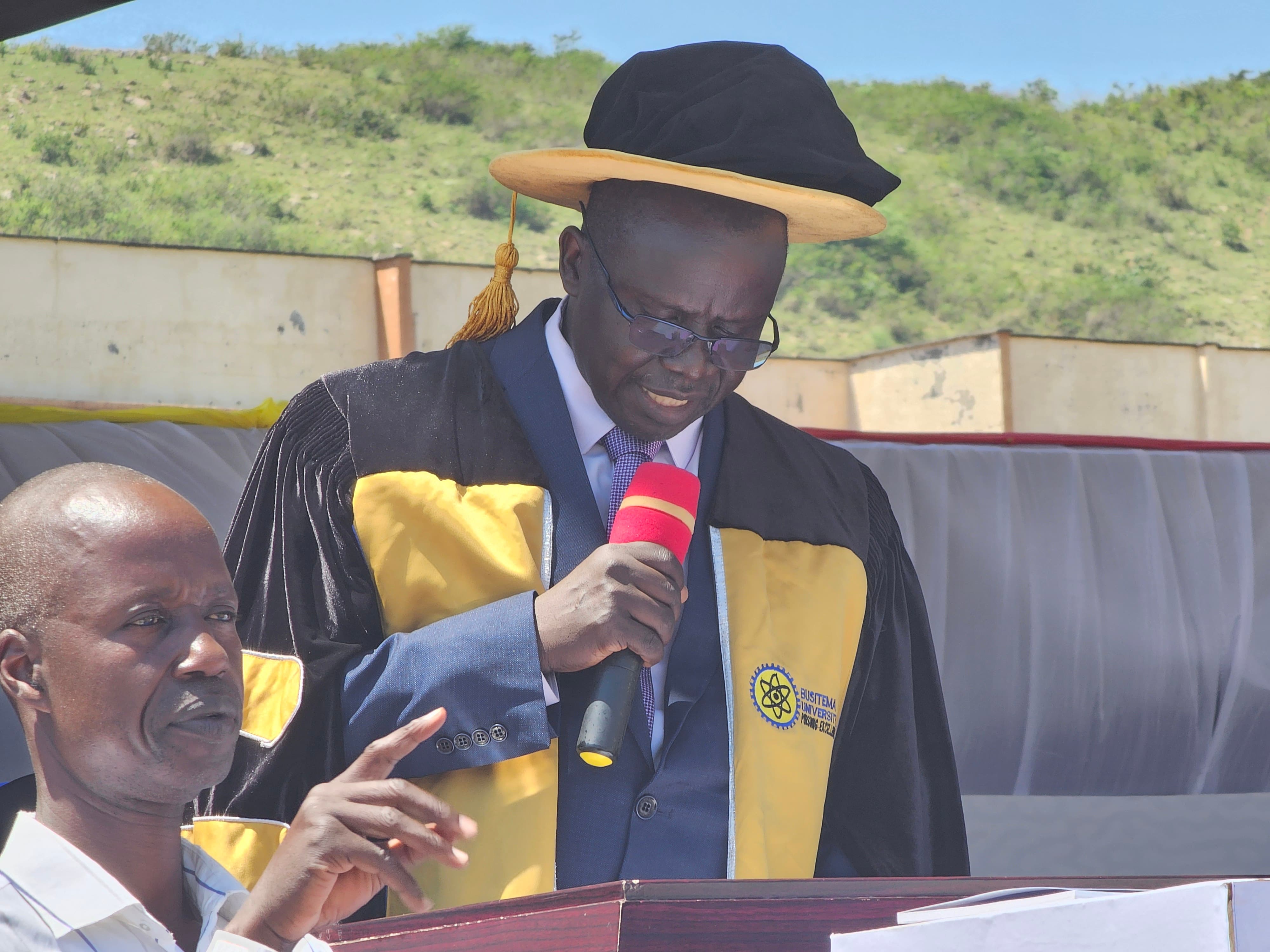
The need to turn university knowledge into something useful outside the campus also shaped the address by Rt. Hon. Dr. Crispus Walter Kiyonga, Second Deputy Prime Minister and Deputy Leader of Government Business in Parliament, who represented His Excellency the president of the Republic of Uganda, Yoweri Kaguta Museveni at the ceremony. He urged universities to link research more closely to the needs of communities and to engage government with evidence and informed criticism on the country’s development priorities.
Hon. Kiyonga urged universities to ensure that research responds to the needs of the communities around them, arguing that academic work should contribute more directly to the country’s development. He also challenged professors to interrogate Uganda’s economic ambitions and use their expertise to advise government on what would be required to achieve them.
Among the targets he cited was the government’s ambition to grow Uganda’s economy to US$500 billion by 2040, a goal set out under the country’s Tenfold Growth Strategy. He called on Busitema University to introduce political economy into its teaching, saying universities should help deepen understanding of the economic and policy choices shaping national development.
Hon. Kiyonga also turned to corruption, warning about the scale of public resources lost through the vice and backing stronger action against it. He later addressed Busitema’s infrastructure needs, saying he would engage the Speaker of Parliament on a possible fundraising initiative, including a marathon, to help mobilise resources for improvements at the University.
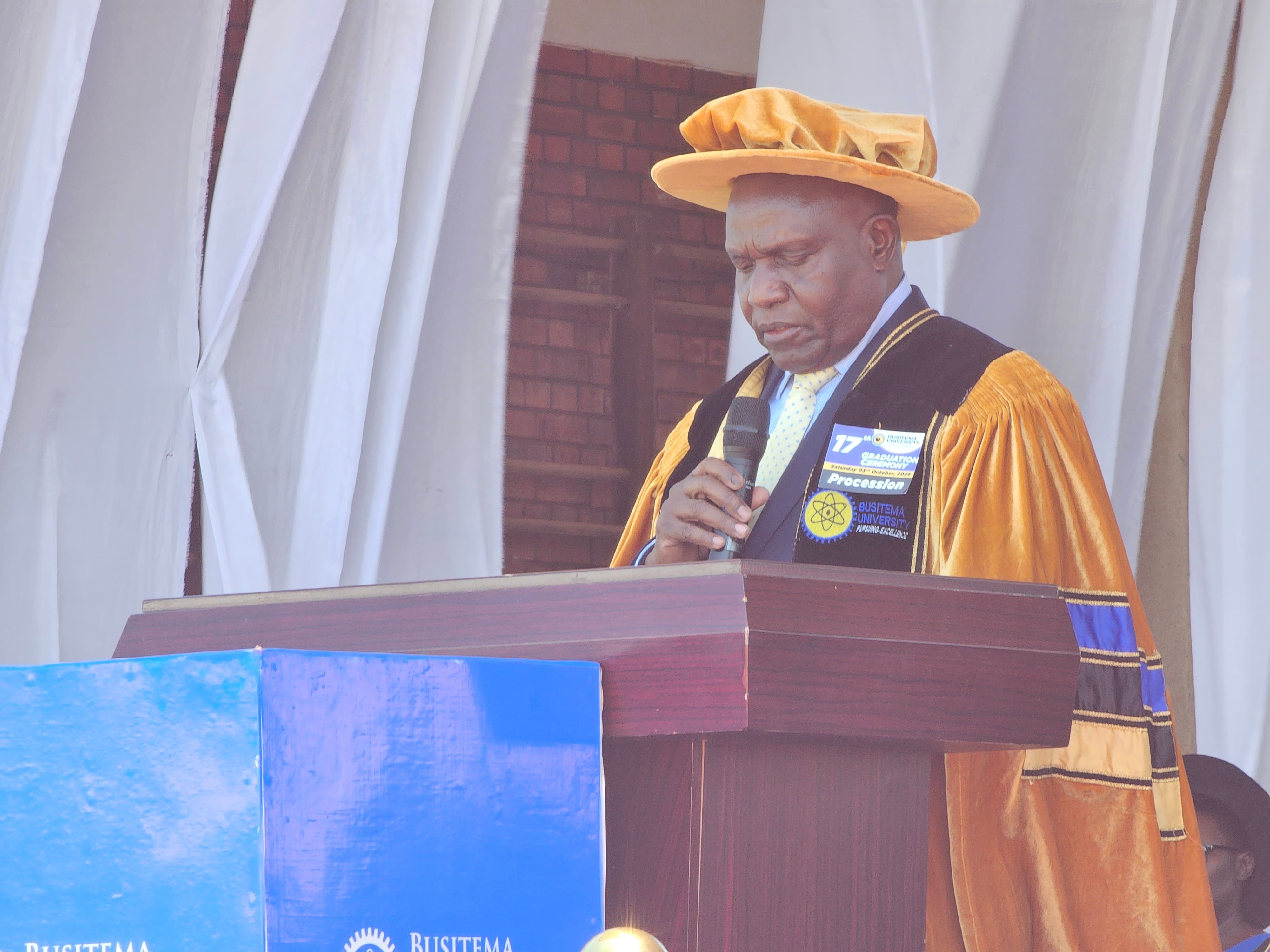
Achieving that, she said, requires universities to treat quality assurance as part of everyday academic practice rather than simply an accreditation requirement. She pointed to adequate laboratories, teaching facilities, libraries, digital resources, reliable connectivity and competent, motivated staff as some of the foundations needed to maintain the quality of university education.
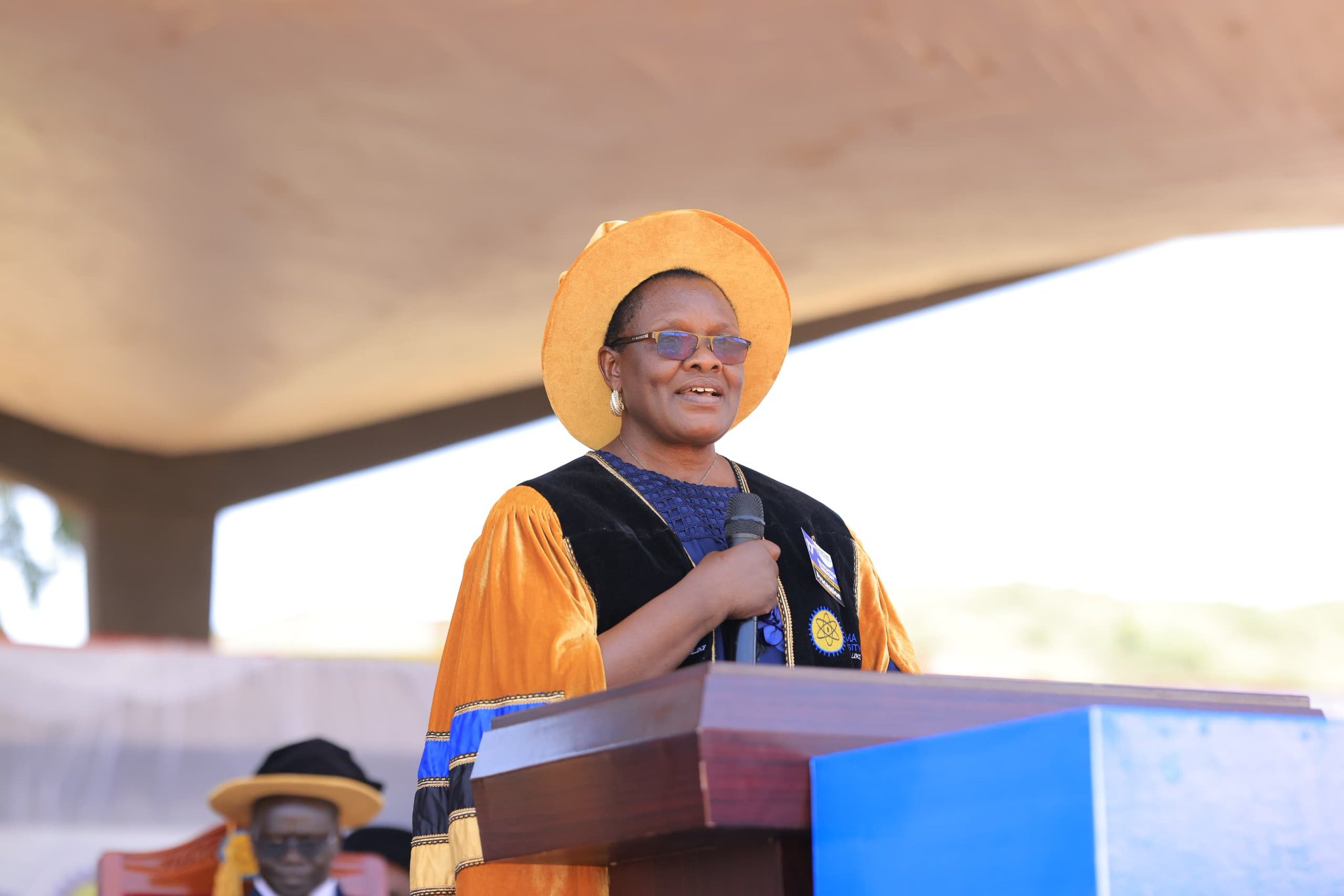
Chemutai also turned to the growing influence of artificial intelligence, urging Busitema university to develop policies that can guide the use of emerging technologies as they become more common in teaching, learning and professional practice.
Busitema University Chancellor Eng. Dr. Prof. Badru M. Kiggundu used his address to look past the ceremony itself and towards the choices graduates would make after leaving the University. He told them that excellence should not be reduced to grades or the certificate they received on the day, but reflected in how they continued to learn, improve and contribute to society.
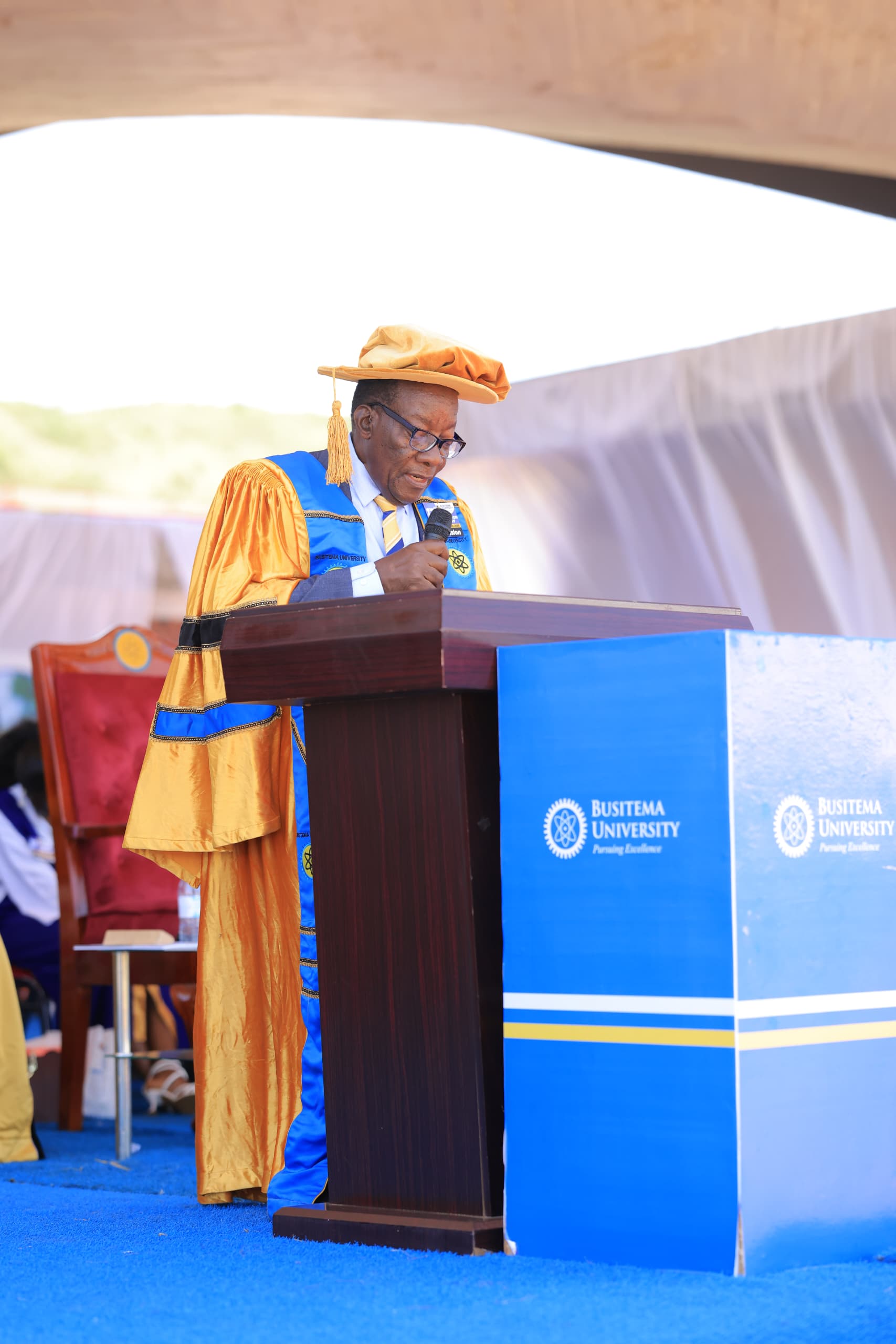
He urged the graduates to carry integrity, responsibility, resilience, innovation, respect and service into their professional lives, alongside the knowledge and skills they had gained at Busitema.
Eng. Kiggundu also reminded them that the opportunities ahead would take different forms. Some would join established organisations, while others would build businesses, pursue research, teach, enter public service or take up leadership roles in their communities. His challenge was for them to think less about waiting for opportunity and more about the problems they could solve, the knowledge they could turn into practical solutions and the opportunities they could create for others.
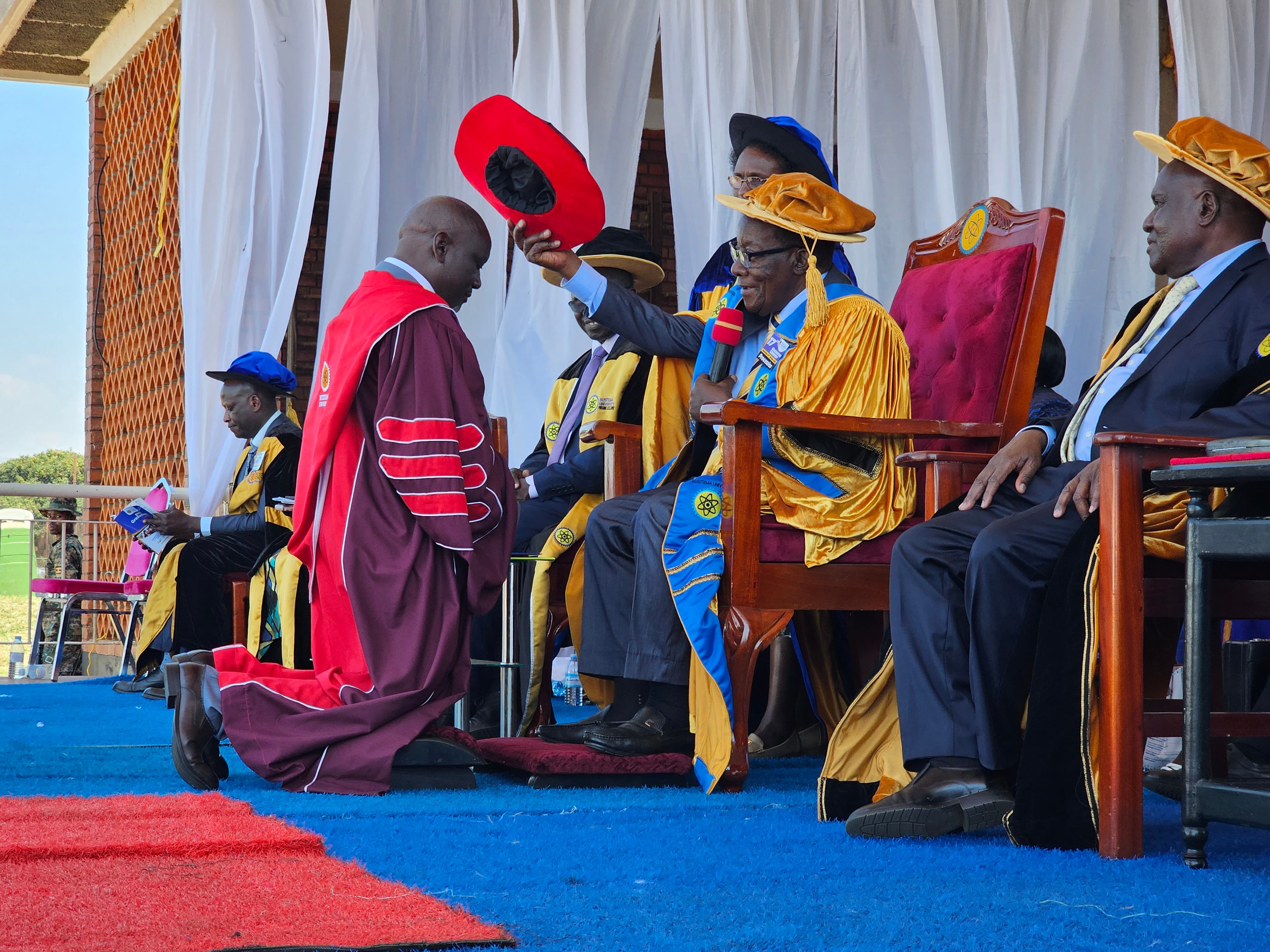
Prof. William Bazeyo, Chairperson of Busitema University Council, spoke more directly about the world the graduates were entering. University had provided a largely structured environment, he said, but life after graduation would require them to identify opportunities, create some for themselves and keep building their skills as the world of work changes. Graduation
Artificial intelligence was part of that changing landscape. Prof. Bazeyo encouraged graduates to learn how to use it, noting that the University Council had supported its adoption in teaching and learning, but warned against treating the technology as a substitute for their own judgement. Information produced by AI, he said, still had to be questioned and checked rather than accepted simply because a machine had generated it. Graduation
He also warned the graduates against corruption as they entered workplaces and public institutions. Turning to local leaders and employers, Prof. Bazeyo urged them to recognise the knowledge and ideas young graduates bring, and rejected the expectation that people should have to pay before they can secure employment.
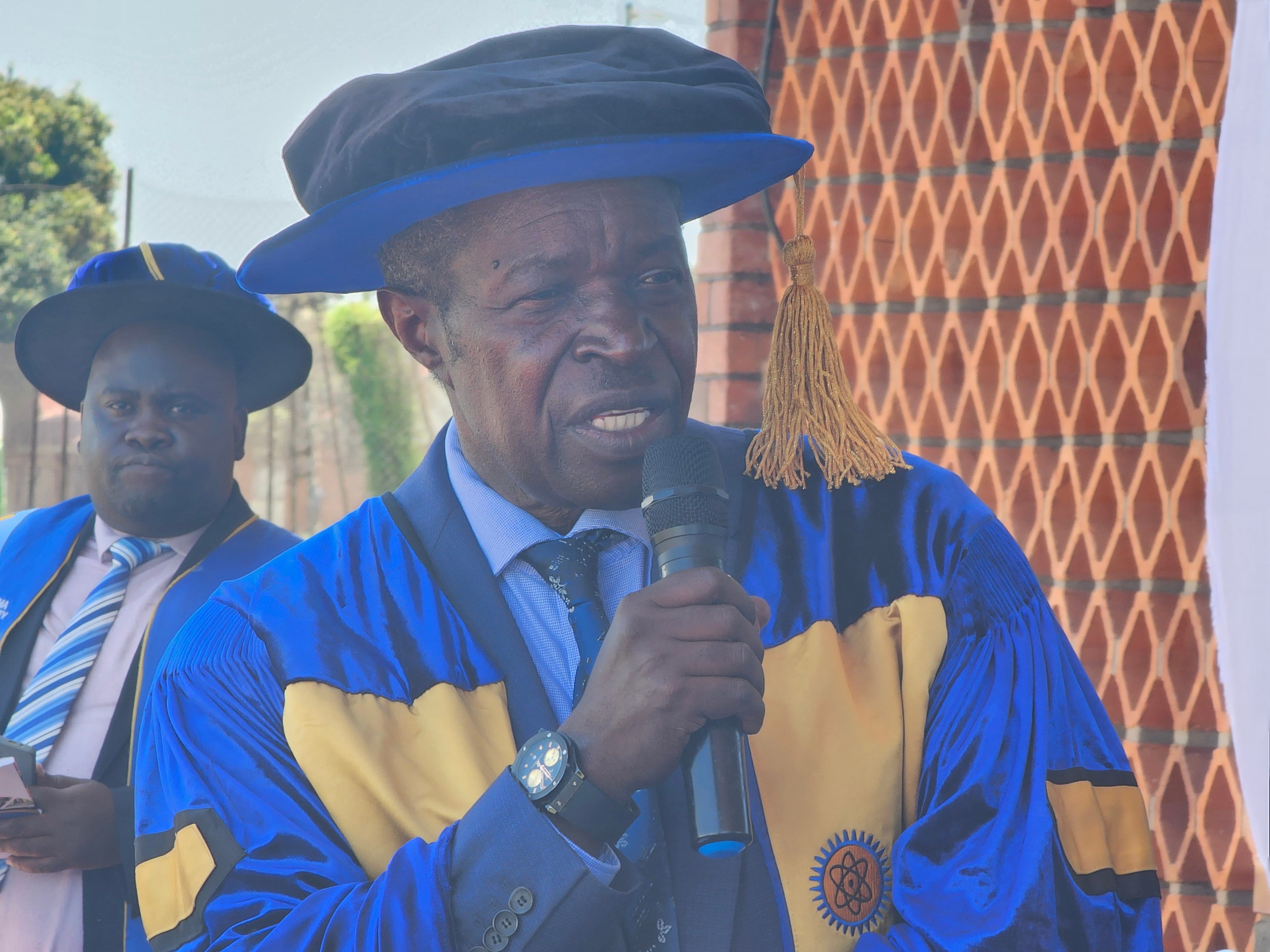
Among the 2,268 graduates, a smaller group left the ceremony with additional recognition for outstanding academic performance.
Amanya Cosma, who completed a Bachelor of Science in Natural Resource Economics with a Cumulative Grade Point Average of 4.86, was recognised as the overall best male graduate. Kiyai Patricia, a Bachelor of Science Education graduate with a CGPA of 4.76, was named the overall best female graduate.
At postgraduate level, Nantale Tracy Cynthia was recognised after completing the Master of Science in Cyber Physical Systems Engineering with a CGPA of 4.69. Graduation
Other faculty best performers were Maduvan Johnson from the Faculty of Management Sciences, Chemutai Kenneth from the Faculty of Agriculture and Animal Sciences, Kuwagala Patience from the Faculty of Health Sciences and Atwebembeire Prode from the Faculty of Engineering and Technology. Amanya and Kiyai also led their respective faculties.
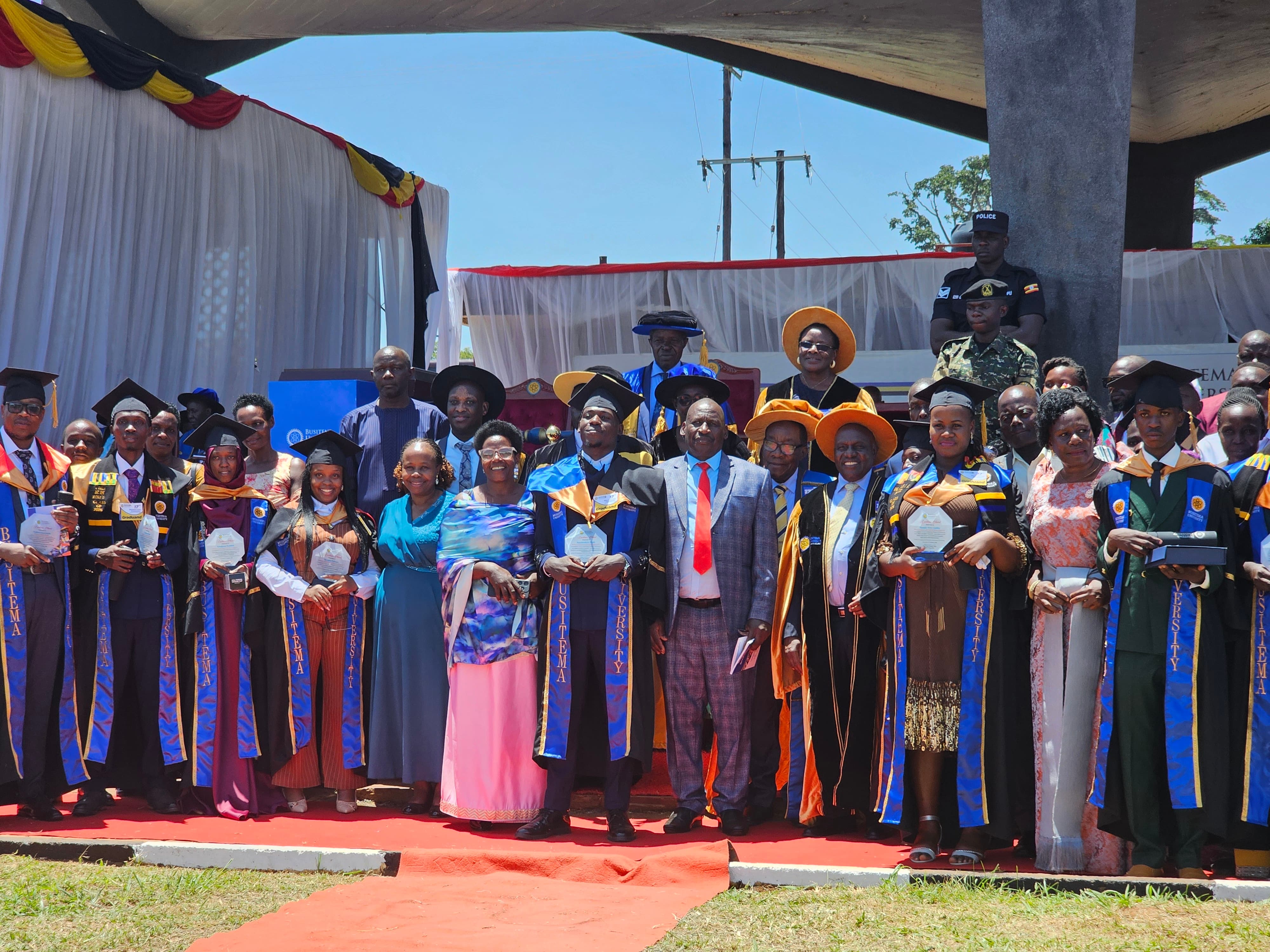
The 17th Graduation Ceremony added 2,268 graduates to a Busitema University alumni community that now stands at 18,799. More significantly, it brought together many of the questions now shaping the University itself, from the relevance of higher education and the use of artificial intelligence to research, innovation, infrastructure and the kind of opportunities graduates will have to create for themselves.
As the Class of 2026 leaves Busitema, the focus now shifts from the qualifications awarded on Saturday to how that knowledge is used. The measure of the day will ultimately be found in the problems graduates help solve, the institutions they strengthen, the ideas they develop and the communities their work goes on to serve.

 MISSION: “TO PROVIDE HIGH STANDARD ICT SOLUTIONS FOR TEACHING, LEARNING AND RESEARCH FOR A TRANSFORMATIVE SOCIETY”.